Thursday, February 6, 2014

Chinese Calligraphy-Introduction


Chinese Calligraphy is an ancient Chinese art form. Why is it  considered an art form? Come to class ready to discuss your observations.  We will look at the 4 Treasures in class and also try to make some characters for ourselves.  Please be sure to have your Sumi brush with you or bi!

Here is another short clip about the Importance of Chinese Calligraphy to the Chinese.


Sunday, December 22, 2013

Christmas Break Art Challenge

Hey Art Students! 

I hope this blog post finds you all enjoying the wonders of our Christmas season!  Here is the long awaited Christmas Break Art Challenge! Now remember this is completely optional but can earn you another museum card if you complete it and bring it in our FIRST WEEK BACK TO CO-OP!
 This is a good way to make up for cards that you have not gotten. If that interests you then read on.
Your challenge:
 to create something that represents something you would like to accomplish in the new year. This could be anything, a character quality, a goal, even trying something new. Whatever it is you must create something with the following perimeters:
  • The substrate must be 8.5 in. x 11 in.
  • You must use fabric in your artwork somehow
  • You must use an ellipse somehow
  • You must use words somehow-ie: written, cut out/ pasted 
  • Must bring it first week back to co-op to earn museum card
  • You can use a medium of your choice and if you want use more than one
  • You must get up in class and tell us about it (time permitting)
I look forward to what you will do. As always you do some incredibly creative things and it brings me great joy to see you working out your creativity in these challenge projects.

Just a couple of  reminders:
 There is a special goodie that you can earn with your museum cards.  As of now there has been opportunities to earn 9 cards including bonus cards or 5 regular museum cards. Break time is a good time to check and see where you are at, what you might be missing, and what you need to do to get where you want to be.

 It is also a good time to get out your art box check list and make sure your art box is stocked and ready to go for the rest of the year.  This form can be found in your notebook at the front along with the art studio rules and conduct sheet. If you can't find it, download and print off a copy HERE and place it in your notebook.
Have a wonderful, very, Merry Christmas with your families! I will see you next year! Mrs. W

Wednesday, December 4, 2013

Frontalism

 I find Egyptian artwork interesting to study for reasons  despite its formal and organized design elements: One is called Frontalism; the particular way in which Egyptians depicted humans in their artwork. The other, is the beautiful patterning they used. This reflects their relationship to the environment and their spiritual belief system. It is sometimes difficult to think about these artifacts as "artwork" when you compare it to other wonderful examples of artwork later in history. But interestingly, Egyptian art was not meant to be seen by others at all. The designs and patterning were created for the deceased as they journeyed into the afterlife. Often images like flowers  were used in symbolic ways to represent, for example new life and rebirth.(http://smarthistory.khanacademy.org/egyptian-art-an-introduction.html pg.1)

 Please watch the video below to understand more about this unique technique done by this fascinating ancient people group.


We will be using real papyrus paper in class for our artwork this week. Watch this video on how papyrus paper is still being made in Egypt.


Monday, November 25, 2013

Ancient Art and Culture

We now begin an exciting part of our art journey this year as we start to look at ancient artwork and its impact on culture in the ancient world. For the rest of the year I will be uploading videos and photos for you to look at, prior to our class time. This will give you some background information and photos we just don't have time to look at in class. My plan is to give you a couple of questions to think about that  we will answer and discuss in class. You will find these at the end of the blog post.  Some questions you may not have an answer for, don't worry because we will talk about it in class as we are working.

Gate of Ishtar

The first ancient civilization that we will look at is Nebuchadnezzar's Babylon! Isn't this incredible? I think so! We will focus on the artwork that forms the Ishtar Gates and Processional into the ancient city of Babylon. Please watch the video below from Khan Academy. We will be looking at a portion of the processional and recreate paper mosaics of the design aspects of this amazing entrance. As you look at these pictures think about these questions.

1.)What kind of materials did the ancient Babylonians use to create this magnificent entrance?
2.)Why do you think that Nebuchadnezzar built the entrance this way?

All Photos from Google Images

Bas Relif of Lion's head


            Decorative processional boarders                           Nebuchadnezzar's inscription

Decorative brick designs and details of archway

Tuesday, November 19, 2013

Creation- Student Lead Project

CREATION n.
the act of producing or causing to exist; the act of creating.
the fact of being created.
 something that is or has been created.
the Creation, the original bringing into existence of the universe by God.
the world; universe.

This word has lots of meanings, above is what dictionary.com listed for the definitions. I would like for us to look at the first definition in reference to our next project which has to do with the fourth definition.  This is where you get to use your own ideas and images from your own mind and heart to create something for the rest of us to see. I have given you a few instructions so that you have a starting place and don't get overwhelmed. At the highlighted portions of this entry are some links if you forget what we talked about in class. We will start on this next week HIS students and after Thanksgiving Immanuel students. 

I do want to talk about preliminary design sheets. This is an important step for you as a student because it helps you get what it is that is rolling around in your head onto paper and gives you a place to begin. Nothing is more frustrating than trying to do an assignment well and you get stuck because there is too much good stuff up in your brain. Sometimes it is hard to choose! Please come to class with your thoughts and ideas out of your brain and sketched and written on your preliminary design sheet. Don't worry you can change your mind once you get going but this gives you a place to start! I am so looking forward to what you come up with I know I will be dazzled by your incredible creativity and artistry!

THANKSGIVING ART CHALLENGE

Worth   2, YES 2 BONUS Cards …   I CANNOT WAIT to see what you come up with!
Here is the challenge to do over break  if you choose and your art work MUST include the following elements:
·        Must include 2 skills that have been learned so far: value shading, 6 components of drawing.
·        Must use more than one medium, this includes: oil pastels, water color pencils, sketch pencils. Anything your like! Fabric, recyclables, different types of paper, paint, ink pens, crayons. Sky’s the limit- this is your chance to use what you would like and maybe try something new-super cool!
·        It must be done in color-that’s right it could be one or 101 you choose!
·        Lastly it should be representative of something you are thankful for OR a family thanksgiving tradition.
·        YES YOU GET TO USE YOUR OWN IMAGINATION!!!!!
·        To earn your bonus cards you must bring it to class the week we return for co-op

·        Must be created on 8.5 x11 paper

Tuesday, October 29, 2013

Drawing Faces and the Golden Section

Our next assignment is learning how to draw faces. Yes, yours! Aren't you excited? As I learned to draw faces, I started to look at faces differently. I now look at the relationship between the parts of the face. How far apart are eyes? How about the way shadows are cast on cheekbones and chins. What gives a face character? Dimples? Pimples? Wrinkles? Scars? This week spend some time studying the faces in your life. Look at symmetry, how big is the forehead in relation to the other parts of the face. What gives your face character and is uniquely you? How can you portray that in a drawing? Where do the dark values vs. light values naturally occur on your face?

This week look at pictures of yourself and choose a picture that is a close up of your face or one that you can enlarge. It must have detail! You should be able to see all your features well. Another option if you are pressed for time or can't find a good photo with detail,  find a picture in a magazine where the whole page is taken up by the face- beauty magazines have good pictures to use. Bring these into class next 
co-op day please!

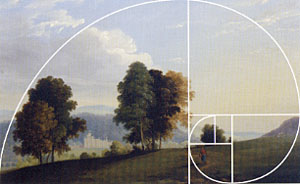
As you study and observe, you will start to see the proportions that naturally occur on your face. When looking at the ratios or spaces between the forehead and eyes, nose and mouth do you see anything interesting?  You should, because these proportions and patterns are found all over the place in nature and were created in the ancient world. This patterning was discovered long ago, in the 6th century BC, by mathematicians. It was used by the Egyptians to build the pyramids. Artists like Leonardo da Vinci, used it when he painted the Mona Lisa., as well as, musicians  and scientists  have used it throughout the ages. It is called the Golden Section or Golden Mean. Believe it or not we are still using this in design today, take a look at the iPod or iPhone both were designed with the Golden Section theory. Sweet!

To watch a video on this, visit this website HERE (WARNING there is a nude, The Vitruvian Man, famous drawing, created by Leonardo da Vinci circa 1490.) This short You tube is fascinating and gives us perspective and insight  into our created world. HERE is a website with Golden Section applied to the human face. SO cool! HERE is a tutorial on the female face to draw step-by-step. If you click on the image it will get bigger so you can print or look at it. Have fun this week!

NEW UPDATE: You can get the practice worksheets for class HERE and HERE (3 pages total) if you wish to practice(which I hope you do in preparation for this week!)

Monday, October 21, 2013

Feathers and Shells a Study of Symmetry and Balance


These two simple object hold such wonderful aspects of balance and symmetry. We are continuing our study and skill building in drawing. This week we will look at the beauty created in balance and symmetry.

Please review the terms: 
  • symmetry/balance
  • cross hatching
  • and here is a new term you will need to know. Negative drawing. The picture below is from the Art Instruction Blog  which has lots of other awesome art information but you can go here to learn more about negative drawing.

Negative drawing is a great technique to use if you are getting distracted by too much detail. It allows you to get shapes drawn by concentrating on the space surrounding the object rather than the object, itself. This allows you to draw what you see, not what you think you see. It is a way to trick your brain and let go of preconceived images. A bonus card for those who bring in a negative drawing, for next class time.