Showing posts with label classical education art. Show all posts

Tuesday, March 10, 2015

The Art of Gongbi Silk Painting


Our  next project, will focus on China in the Middle Ages. A style of painting that emerged during this time was technique done on silk called Gongbi .  The word Gongbi comes from two words: Gong, meaning detailed and Bi, meaning writing. In this tradition of painting the brush is held in the same way Chinese characters are written and realistic details help the paintings take shape.

The Gongbi tradition of silk painting dates from 700-1900 BC and uses detailed brush work and a colorful paint palette. In class we will create our paintings using some traditional subjects found in nature in China: colorful Koi and the stunning Lotus Flower.  Here is a couple of examples:


The Lotus in design and patterns


Example of Koi fish 

For this particular technique only things found in nature or real life are painted, nothing from the imagination is painted in this way, according to Henry Li, of Blue Heron Arts,Co.

We will be working on silk material treated in the traditional way using a sizing solution to stiffen it and then do similar steps of back painting, then front painting and details using layering techniques and washes.

The following video should give you a wonderful appreciation for the precision and careful execution the artists takes as she prepares her drawing, prepares her silk and mixes her colors. I was mesmerized by her grace and the coordination of her brushes and brush strokes. I love how, even the movements of the artist as they paint, is done with artistry. I feel this is something I can learn from. It is very symbolic of Chinese culture and other Chinese artwork.


I hope this gets you excited about our next project! Mrs. W. 

Saturday, February 28, 2015

Art of Gothic Lettering


                                                                        Morte d’Arthur, a poem by Alfred Tennyson

As we are learning the Gothic hand during class time, I wanted to give you a couple of resources and examples for you to use, in case you do some work at home. This website is a wonderful site that walks you through each stroke of a letter (in red), very helpful if you get stuck. Visit HERE. I would encourage you to poke around this site there is lots of information about calligraphy in general there too.

As we get into letter art, we see how the talent of medieval scribes and modern day calligraphists bring the letters to life! Watch this video to see what I mean.


 There is also a link HERE  for the finished alphabet set in a PDF if you wish to download and print it yourself once at the website scroll down till you find a light blue banner and the button is over the top. Letfties don't despair this video is just for you!

This is a great video for those of you who are left-handed ah-ha so this is how it is done!
 (I finally found a video for you;o)

Here are some pictures of letter art I found on the internet. Aren't they just beautiful in and of themselves. Our project for our Book of Hours will consist of a longer writing,, perhaps a verse, and an illuminated letter at the beginning.  You will have to decide what kinds of elements you will include. Will it have a scene? Knot work, flourishes, flowers, creatures? Will you decorate the letter or leave it plain? Where will you paint your letter with gold? Hopefully, I have sparked your imagination and you will have some ideas for our class time.


Monday, December 29, 2014

Normans and Saxons...How Do We Know Who Won?

Anyone who is a student of history has heard of the Battle of Hastings. But if you are an art student, you may not know what I am talking about. But it is the art student who can truly appreciate something from that history that was left behind. We will be using it as our art model for this next project, it is called the Bayeux Tapestry. What is this you ask? Like all other posts on my blog, it is my personal opinion that it should be considered a great work of art to study during this time period. Like the Book of Kells, the Bayeux Tapestry, is just extraordinary!
In the Bayeux Museum, France
And here is why: everything use to create this amazing embroidery was handmade. Everything, the copper alloy needles used,  the flax grown and harvested, the linen woven into material, to the wool spun into thread, to the herbs harvested and then used to dye it, and the the wooden frames used to hold it as it was sewn. All of these things were made by hand. That fact alone is amazing in 1066 AD, but here is the part that will make you gasp in astonishment, yes, gasp I say!

This embroidery is 229 feet long and measures 19 in. wide.*Gasp!* It is made up of nine sections sewn together to make a long banner. The design is made up of a wide center band where the main story is told and then flanked by a boarder on either side with symbols, small pictures and decorative bars. There are also simple Latin references for the person who was a novice at reading Latin.

Close up of stitching
 There are 4 different stitches used throughout the tapestry and all the woolen colors have been dyed using only 3 natural plant dyes! However, there are 10 colors throughout the tapestry! Click on this link to learn more about this amazing fiber art piece.(Pierre Bouet and Francois Neveux , Internationa experst on the Bayerux tapestry,http://www.bayeuxmuseum.com/)

 Here is what it might have looked like as it was being made

This beautiful handmade tapestry tells the epic tale of a great battle between William the Conqueror of France and  Harold the Unfortunate of England.

Here is a History Clip to watch:


Here is a great website link on the Norman Conquest

Here is an animated version of the tapestry:


Here is a super fun interactive link where you can  make your own rendition of the Bayeux tapestry. Must print it off and bring it in for a bonus card! Just try it out and have fun. Mrs. W

**Important** Time to check your art box for your supplies and to make sure it is stocked with everything you need.  HERE is a master list for you to use. Please do this before next class time.For the next 3 weeks you will need your embroidery hoop, tapestry needle, and scissors.   

All photos are from Google and used for educational purposes


Wednesday, November 12, 2014

Uncial Hand Of Calligraphy


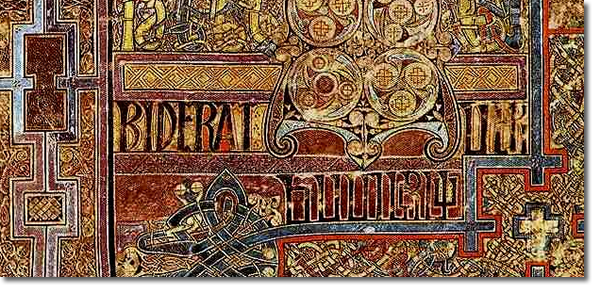
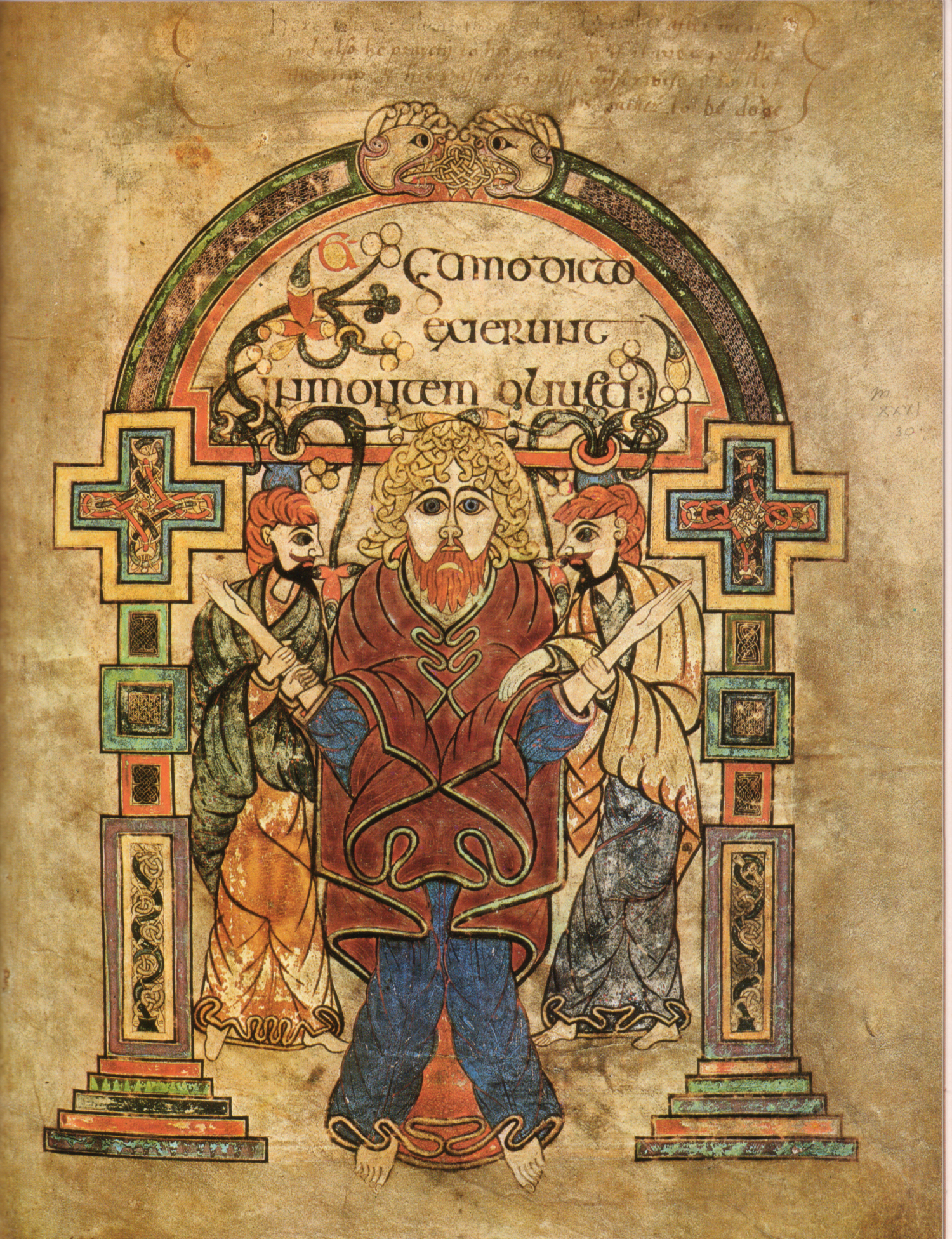
Have you ever heard of the Book of Kells? This is one of the oldest examples of a biblical manuscript in tact today.  It contains the four Gospels. It is written in Latin and was written by medieval monks around the 8th century. Some scholars say that it was most likely written in scriptorium of a monastery on the Isles of Iona, off the northwest coast of Scotland. It was moved to the village of Kells, in Ireland after a Viking raid to keep it safe around 680AD.  Later in the 11th c. it was stolen, where the cover was torn off and the remainder of the book was discarded in a ditch. Sadly, the cover has never been recovered. It is believed, that it was stolen for the gold, precious stones and gems that encrusted its cover.

St Colum Cille Monastery- founded 561 AD, Isles of Iona, Scotland


It contains 680 vellum pages! Vellum was painstakingly made from calfskin. Then those pages were stacked into folios, 340 of them, and then sewn together to create this extraordinary book. What is even more remarkable is that all but two of the pages contain illuminated artwork and intricately painted Celtic knot work, some of which, is so refined it can only be seen with a magnifying glass!

Details of Celtic Knot work
 There were 10 different colors of ink used. The inks were natural dyes made from plants, roots, bark, minerals, shells and other things found in nature, some of which had to come from other continents. Many of the pages are illuminated with gold. There are pages that feature what is referred to as "carpet"
pages because of their graphic layout.
Carpet page

 The book also includes portrait pages and partially decorated pages as well.

Portrait page laid out like a carpet page

Partially decorated page
 This is such a fine example of the artistry and craftsmanship of medieval Europe.  It is an inspiring model for us to use as we study for our next project!


Details of above corner


If that alone isn't enough to make it awesome, then maybe this will interest you. It is also a great example of Uncial calligraphy, the second hand of calligraphy that we will be working on.


 Today the book of Kells is on display in the old library,located at Trinity College in Dublin, Ireland. It is visited by 500,00 people each year.


Please come to class prepared with your calligraphy pen in your art box.  This will be an instructional day with some practice time to it.
(abouteducation.com, "The Book of Kells" Melissa Snell-Medieval History Expert)
(tcd.ie/Library/bookofkells/book-of-kells/, Book of Kells)
photos taken from Google for the purpose of education

Sunday, April 27, 2014

Friends....Romans....Countrymen! Let's learn about Roman Architecture


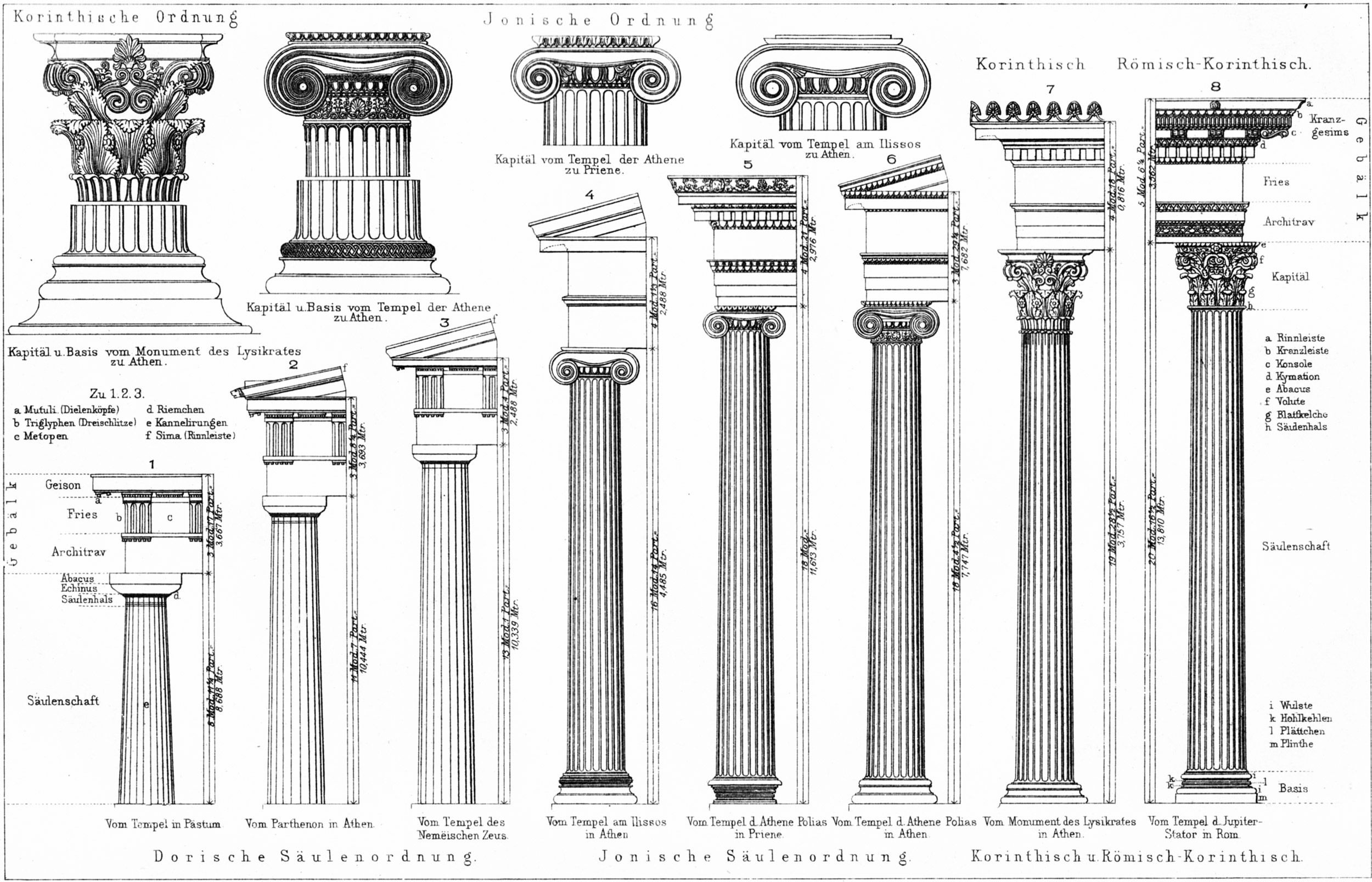
Our last subject of study for this year in art will be the beauty of  Roman architecture. Above is a chart from Wikipedia that shows the progression and development of the Roman column. There are three phases of development and as you can see it becomes more and more detailed and beautiful. Please watch the video
below to learn about these three phases or orders of architecture


Also please click on the link below in preparation for our last few weeks of art at co-op. As you visit this site there are two things I would like for you to do once there. First watch the short video on the Pantheon and second scroll down to the next picture. It is here that you can visit the Pantheon in real time because there are cameras set up in  and around the building. You are able to maneuver the camera and look up and around the building. Look for some artwork on the wall that is highlighted by the sun as it passes through the opening in the center of the dome. Isn't it beautiful? You can virtually visit this ancient place from your computer, isn't that so cool!

 Here are some other wonderful pictures too!


images gathered from Google images 


Monday, November 25, 2013

Ancient Art and Culture

We now begin an exciting part of our art journey this year as we start to look at ancient artwork and its impact on culture in the ancient world. For the rest of the year I will be uploading videos and photos for you to look at, prior to our class time. This will give you some background information and photos we just don't have time to look at in class. My plan is to give you a couple of questions to think about that  we will answer and discuss in class. You will find these at the end of the blog post.  Some questions you may not have an answer for, don't worry because we will talk about it in class as we are working.

Gate of Ishtar

The first ancient civilization that we will look at is Nebuchadnezzar's Babylon! Isn't this incredible? I think so! We will focus on the artwork that forms the Ishtar Gates and Processional into the ancient city of Babylon. Please watch the video below from Khan Academy. We will be looking at a portion of the processional and recreate paper mosaics of the design aspects of this amazing entrance. As you look at these pictures think about these questions.

1.)What kind of materials did the ancient Babylonians use to create this magnificent entrance?
2.)Why do you think that Nebuchadnezzar built the entrance this way?

All Photos from Google Images

Bas Relif of Lion's head


            Decorative processional boarders                           Nebuchadnezzar's inscription

Decorative brick designs and details of archway

Saturday, June 8, 2013

2013 A Great ART Year!


Student Artwork HIS Co-op End of the Year Program

This year was wonderful for me as a teacher! I added another art class to my schedule and was so pleased with all the students progress. I taught at two different co-ops, HIS Ministry Co-op and Immanuel Co-op, different style co-ops but both classes engaged great homeschooling students.

This year we studied the world of Modern Art. I have to say, that as a teacher, I was pleasantly surprised by how much my students enjoyed this era of art. What I enjoyed most was being able to present living artists to my students, even one from our area who grew up in my hometown. Students had the opportunity to attend a couple of free exhibits at our local art museum, Andy Warhol and Eric Carle too. I love being able to offer students this opportunity. Experiencing art up close and personal is so different then seeing it on a page in a book.

Students also had the opportunity to enter their artwork into our local Spring Fair and be judged against their peers.  This too, is part of an artists life. I enjoy encouraging my students to take the opportunity to engage other people in what they are doing and to have the courage to take that risk. I never tire of seeing a students confidence increased!

I also enjoyed taking techniques, that I learned in my continuing education over the summer, and teaching them to my students. This year students learned a saturated paper watercolor technique and stenciling technique I learned at a Kay Barnes workshop. Students had fun creating their own stencil to use in their creation of a Marc Chagall  painting.

Below are photos from the End of the Year program at HIS Co-op. Students at HIS Co-op had a great time working collaboratively like, Dale Chihuly, to make a mural. This is our version of  his Mille Flori.  In this project students studied pattern and shape and looked at contrast of colors. Fabulous!

Thanks for a wonderful year and making the world a beautiful place with what you have created, Mrs. W


HIS Mille Flori a Tribute to Dale Chihuly


Student works. Some of the Artists studied: Mondrian, Rene Magritte, Marc Chagall, Jasper Johns, and  Seurat 

Monday, April 29, 2013

Art and Faith

Makoto Fujimura
This is our last Artist model for this year, but it is the one I am most excited about sharing with all my Apprentice with the Masters Art Class students!

Makoto Fujimura,  is an artist that really inspires me. I have never been a big fan of abstract art but his artwork is gentle and resonates with such tradition and beauty that I can't help but look at it. It speaks to my heart. He is a modern abstract or non-representational artist with the heart that follows Christ.  Watch this video to learn about how he is bringing together believers and non-believers with this art. My prayer is that you will do the same thing with your own artwork! You can find out more about him at Artsy HERE

One of the letter tiles used in the Four Gospels

Inside the Four Gospels -The Book of John

Charis-Kairos   The Tears of Christ

Please watch this video of Makoto's latest work, entitled Golden Sea. My heart was captivated by his story and this painting's beauty!


Monday, April 22, 2013

Tacoma, Glass, Chihuly...Oh MY!

Dale Chihuly is our next Artist and model for Apprentice with the Masters Art Class.  How exciting to study and learn about a living artist from our own area! Dale Chihuly is an international glass sculptor who has traveled the world and exhibited in many incredible environments.  If you have ever seen an exhibit you know what I mean when I say his artwork takes your imagination to new places! We do not have the budget or the tools to blow glass, but we are going to use the same creative process he does when he is thinking through his work. You and your family can always visit The Museum of Glass in Tacoma to see his work or the Tacoma Art Museum has a gallery of his work as well. But if you can't get there, then you can take a virtual visit here and see the hot shop in action at the Tacoma Glass Museum. Here is an  online look at what is going on in the hot shop today!

We will  watch a video in class so no information video links on this post but I do want you to think through the questions below and come to class ready to share your answers. I think you will be fascinated by the beauty of his art  and his ingenious!

Here is a look at just a few of his pieces to inspire your own imagination.


Two things to think about :
1. How does he blow so many pieces of glass to make his sculptures?
2. What does his glass sculptures remind you of?
3. Do you see any elements of art in his work? Which ones?(hint: look at your new vocabulary words)


Monday, March 18, 2013

The Art of Eric Carle


I am really excited to introduce our next model of study. He is a living, modern, artists. Not only is he an artist but also a designer, an author and illustrator too! I am talking about the gentleman who wrote, The Very Hungry Caterpillar, Eric Carle.

He has an exhibit at the Tacoma Art Museum that I hope you will take the time to see this April. I think it is very special to study an artists work and then go get to see it in real life!  Go HERE if you don't know the story of The Very Hungry Caterpillar and listen to the artist read this story to you. Go HERE to see how the artist paints the paper he uses to make his art and then, go HERE to see how he then makes pictures with the paper he has created. Talk about SUPER cool!

Eric Carle reading his book

We will be using this process to make art of our own so please be thinking about what in nature you would like to create a picture of. What colors you will want to use?  Choose 4 colors for your picture. Remember our color theory class time? Will you use Primary, Secondary or Tertiary colors? Will you use a warm palette or a cool one? How will you texture your paper? This is a requirement for your picture, please think about this when doing your preliminary design work in class.